

A guide to what works for mental wellbeing: Beyond Blue
 11 Dec 2024
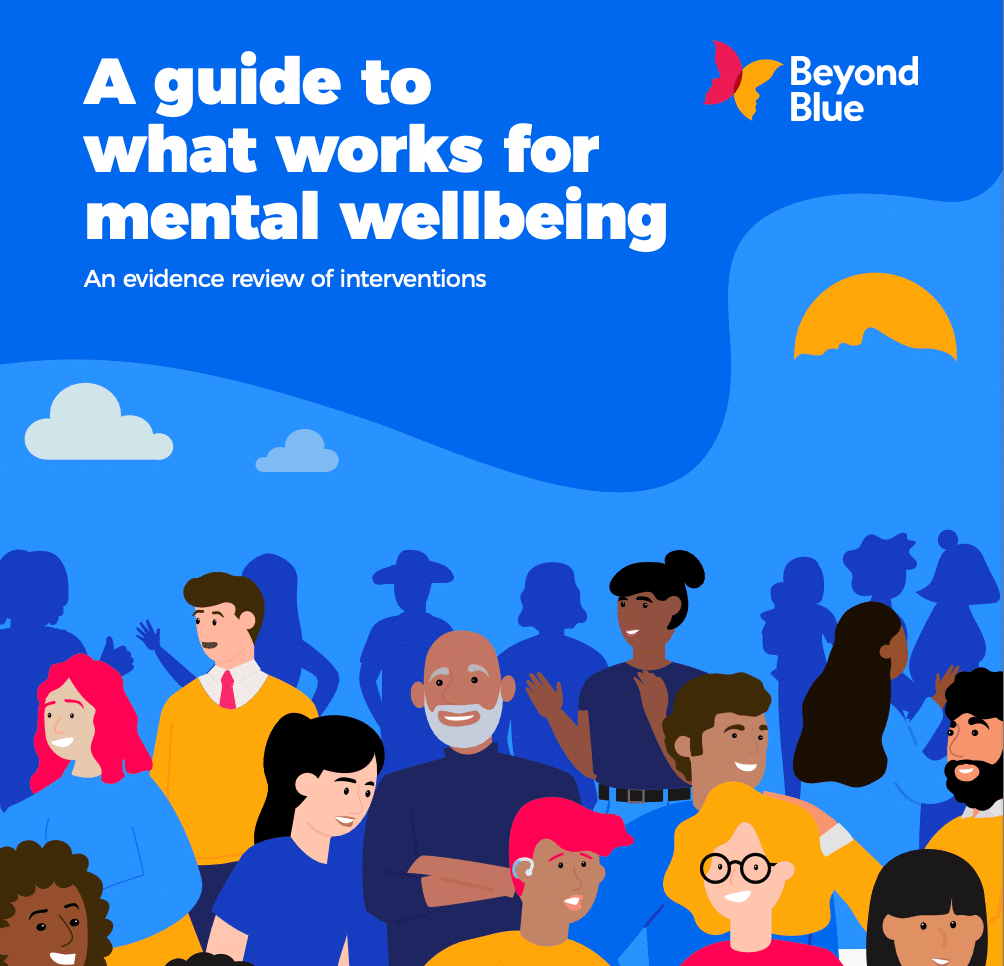
In collaboration with Beyond Blue, we created a comprehensive guide summarising evidence-based approaches to improving mental wellbeing.
There is more to mental health than the absence of a mental health condition, such as major depressive disorder. Mental wellbeing is a part of mental health and relates to how we feel and function on a personal and social level, and how we evaluate our lives as a whole. Mental wellbeing is associated with better physical health, improved quality of life, and a reduced risk of developing mental health conditions.
Based on scientific research, the guide identifies interventions with the strongest evidence for improving mental wellbeing:
- Community Connections: Engaging with community and non-medical resources, including social groups, community centres, exercise programs, and volunteering.
- Physical Activity Programs: Activities such as aerobics, weightlifting, walking, or swimming.
- Art-Based Interventions: Creative activities like drawing, painting, music, or drama.
- Acceptance and Commitment Therapy (ACT): A psychotherapy approach teaching mindful and accepting responses to unpleasant thoughts and feelings.
- Cognitive and Cognitive Behavioural Therapy (CBT): Techniques for managing unhelpful thinking patterns that negatively affect wellbeing.
- Mindfulness Techniques: Cultivating awareness and acceptance of their present-moment experiences.
- Positive Psychology Interventions: Increase positive thoughts and feelings by identifying strengths, practicing gratitude, and engaging in acts of kindness.
- Reminiscence Therapy: Reflecting on past experiences and emotions through photos, music, or sharing memories.
This guide identifies the ways scientific research has found we can improve our mental wellbeing.
If you’d like to learn more:
Download the full report here.
Want to Read More?
 Workplace
Are Australian workplaces ready to support someone who is struggling?
October is both Mental Health Month and National Safe Work Month in Australia, and to mark the start of it our CEO, Dr Joep van Agteren, recorded a short video with a fairly sobering…
08 Oct 2026 3 min read
 Workplace
What is Protect, Promote, Respond?
What is Protect, Promote, Respond? If you’ve been working on mental health in your workplace lately, there’s a good chance you’ve come across the phrase Protect, Promote, Respond. It’s a way of describing the…
08 Oct 2026 6 minute read
 News
News
Introducing Wellbeing Explained
Today we’re launching Wellbeing Explained, a digital home where we invite experts to answer the questions others won’t, bust myths, and go deeper into the wellbeing science. Be Well Co sits in a unique…
04 Sep 2026