

Every leader can be taught to provide mental health support at work
 09 Nov 2026 • 4 min
By Joep van Agteren, PhD, Be Well Co | Written for Wellbeing Explained Substack | October 2026
Short answer: Leaders don’t need to be counsellors to support a team member who is struggling. They need to notice changes in behaviour, respond with care, and know their legal obligations. The CHIME framework (Connectedness, Hope, Identity, Meaning and Empowerment) gives them a practical way to do this.
Mental health awareness in Australian workplaces is high. The capability to act on it is not. Here is what the research shows and what leaders can do about it.
Why aren’t leaders equipped to support mental health at work?
Awareness has grown, but skills haven’t kept pace:
- In 2014, a Beyond Blue and Business Council of Australia study found more than half of 500 surveyed business leaders did not know how to tackle mental health at work.
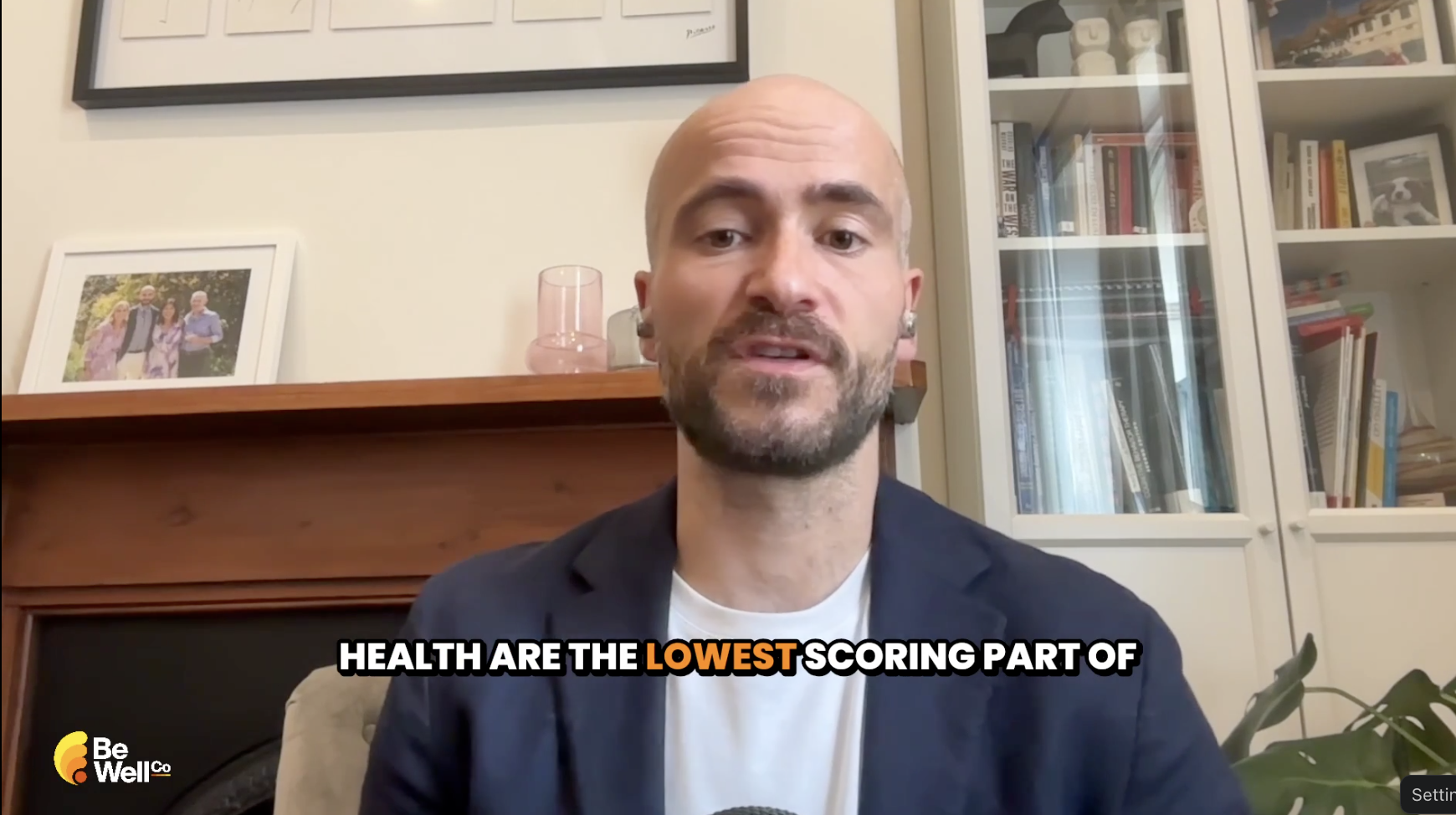
- SuperFriend’s 2025 Indicators of a Thriving Workplace (12,000+ workers) found Capability was the lowest-scoring area, at 62.0 out of 100.
- Allianz Australia’s 2025 research found better manager training was the measure employees most wanted to reduce burnout, while 78% of managers said time, resources and competing priorities got in the way.
- AHRI’s 2025 Psychosocial Risks Report found only 28% of employers invest in leadership and management capability to improve psychosocial health.
What can leaders do to support a team member’s mental health?
At Be Well Co, we break it into three steps.
1. Notice change. Leaders aren’t expected to diagnose anything. They are expected to spot clear changes in behaviour, such as someone becoming less engaged, more reactive, or avoiding people and tasks, and to notice how long it has lasted. A bad day is normal. A change that continues for a couple of weeks or more is the cue to have a conversation.
2. Respond. Name the specific change you’ve seen (not a label), choose a private and unhurried moment, listen with open questions, and agree on one next step and a time to check back in. If suicide comes up, stay calm, ask about it directly, and connect the person to crisis support straight away if the risk is immediate.
3. Know your obligations. Australian law shapes what a supportive response looks like. The principle behind it is good practice anyway: when someone raises a mental health concern, start by working out how to support them.
What is the CHIME framework?
CHIME comes from research on personal recovery in mental health (Leamy et al., 2011). Rather than focusing only on getting rid of symptoms, it focuses on helping someone build wellbeing as they define it, even while living with symptoms. Applied to the workplace, it gives leaders five things to think about:
- Connectedness: Does this person feel part of the team?
- Hope: Can they see something positive ahead?
- Identity: Do they feel seen for who they are and the skills they bring?
- Meaning: Do they connect with a purpose in their work or life?
- Empowerment: Do they have a say in the adjustments, pace and support?
Leaders don’t need to cover all five every time. The idea is to pick the one or two to lean into before the next conversation. CHIME also maps closely to self-determination theory (Ryan & Deci, 2000), which is already widely used in workplaces.
What are a leader’s legal obligations?
In brief (general information only, not legal advice):
- Flexible work: Under the Fair Work Act, employees with a disability, which can include mental health conditions, and at least 12 months’ service have the right to request flexible working arrangements. Employers must respond in writing within 21 days and can only refuse on reasonable business grounds.
- Discrimination: The Disability Discrimination Act 1992 covers mental illness, and employers must make reasonable adjustments unless it would cause unjustifiable hardship.
- Return to work: Duties depend on whether the injury is work-related and covered by workers’ compensation, and vary by state and territory.
Can this really be taught to every leader?
Yes. It takes curiosity, an interest in seeing the person behind the role, familiarity with a few core frameworks, and being okay with getting it wrong sometimes. It doesn’t take a psychology degree or a long training program, though real capability does take some practice.
Read the full article and get the CHIME scenario guide
This is a condensed version. The full article on Substack covers how to notice change in more depth, how to apply CHIME in conversations (including what to do and what to avoid for each pillar), the research on working with defensive managers, and the full legal detail.
Paid members also get the CHIME scenario guide, with three realistic situations to work through so leaders can practise a response before they need it. Get the toolkit on Substack →
Looking to build leader capability in your organisation? Explore our leader workshops
FAQ
Do managers need to be mental health experts?
No. They are not expected to diagnose, counsel or have all the answers. They are expected to check in, know where to find support, escalate when needed and protect confidentiality.
How long should a leader wait before raising a concern?
If a change in someone’s behaviour or mood has lasted a week or two, that is a good cue to have a conversation.
What does CHIME stand for?
Connectedness, Hope, Identity, Meaning and Empowerment.
Want to Read More?
Workplace
Every leader can be taught to provide mental health support at work
By Joep van Agteren, PhD, Be Well Co | Written for Wellbeing Explained Substack | October 2026 Short answer: Leaders don’t need to be counsellors to support a team member who is struggling. They…
09 Nov 2026 4 min read
 Workplace
Why your head feels full or foggy at work
You’re rereading the same email for the third time and it still hasn’t gone in. Or maybe your mind is racing between six half-finished jobs while a seventh pings into your inbox. Either way,…
22 Oct 2026 6min read
 Workplace
Are Australian workplaces ready to support someone who is struggling?
October is both Mental Health Month and National Safe Work Month in Australia, and to mark the start of it our CEO, Dr Joep van Agteren, recorded a short video with a fairly sobering…
08 Oct 2026 3 min read